Set a Festive Table with This Free Crochet Christmas Placemat
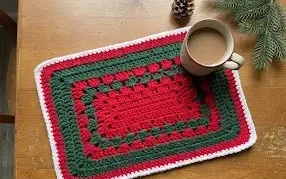
A cotton crochet placemat brings a handmade touch to a holiday table, with a firm, flat fabric that gives plates and mugs a steady place to rest. This square design suits beginners who are comfortable with chain stitches and single crochet, and it gives gift makers a useful project to finish between larger makes. Work the rows in a festive solid shade, or switch colors at the edges for a simple stripe; either choice adds a personal touch without changing the basic construction. The steady back-and-forth stitching makes it satisfying to watch the fabric grow, while the simple shape keeps the project manageable. You’ll find the materials, gauge, and row instructions here, along with practical notes on keeping the edges even and washing the finished cotton piece. A set makes a thoughtful handmade gift, and a single placemat can add a cozy accent to a seasonal meal.
Why You’ll Love This Pattern
A cotton dishcloth is a practical first project: it is a flat square worked in single crochet, with no shaping or seams. The steady rows make it easy to practise keeping an even edge and counting stitches. One 100 g ball of worsted-weight cotton is usually enough, so the project also suits a ball left over from another kitchen make.
The dense fabric is absorbent and holds up to regular washing when you use cotton yarn. Make the cloth in one colour for a simple look, or change colours at the row ends; remember that each colour change adds an end to weave in. The finished square measures about 24 cm, a useful size for wiping counters or washing dishes.
The rows were easy to keep track of, and the cotton made a sturdy cloth that washed well.
— Helen, home crocheter
Pattern Overview & Skill Level
- Skill Level: Beginner. You should know how to chain and single crochet.
- Approximate Time: About 3–5 hours, depending on your pace and tension.
- Construction: A flat square worked back and forth in rows. The turning chain does not count as a stitch.
- Finished Dimensions & Sizing: About 24 × 24 cm (9½ × 9½ in) after washing and drying flat, using the gauge below.
Gauge is 16 single crochet stitches and 20 rows over 10 cm (4 in). Make a small swatch if you want the finished cloth to match the listed size. Exact dimensions can vary with yarn, hook, and personal tension.
Materials & Supplies Needed
- Yarn: About 90–100 m (98–109 yd) of worsted-weight (#4) 100% cotton yarn, approximately 50 g. Choose one colour or use small amounts of cotton in different colours.
- Hook: 5.0 mm (US H-8). If your stitches are tight, try 5.5 mm; a larger hook makes a looser, slightly larger cloth.
- Notions: Tapestry needle for the yarn ends, scissors, and a ruler or tape measure. A stitch marker is optional for marking the first stitch of a row.
- Substitutions: Cotton-bamboo yarn can make a softer, drapier cloth, while a firm 100% cotton gives a more traditional dishcloth texture. Avoid acrylic for a cloth meant to absorb water. A different yarn weight changes the size and yardage, so check gauge and expect to adjust the amount needed.
Stitch Guide & Abbreviations (US Terms)
- ch = chain.
- sc = single crochet.
- st = stitch.
- sts = stitches.
- rep = repeat.
- yo = yarn over.
To make a single crochet, insert the hook into the indicated stitch, yarn over and pull up a loop, then yarn over and draw through both loops on the hook. The turning chain at the beginning of each row is for height only and is not counted as a stitch.
Step-by-Step Pattern Instructions
Dishcloth
- Row 1: With the 5.0 mm hook, ch 40. Sc in the second ch from the hook and in each remaining ch across. Turn. (39 sts)
- Row 2: Ch 1, sc in each st across. Turn. (39 sts)
- Rows 3–48: Rep Row 2 for 46 rows. Keep the same stitch count across each row and work into the final stitch before turning. (39 sts per row)
After Row 48, fasten off, leaving a tail long enough to weave in. Pull the tail through the last loop to secure it. Thread the tail onto a tapestry needle and weave it through several stitches on the wrong side, changing direction once to help keep it from working loose. Weave in the starting tail the same way. Do not cut close to the fabric until the ends are secure.
Lay the cloth flat and measure it. If it is noticeably narrower or shorter than 24 cm, your gauge may be tighter than the pattern gauge. The cloth will still work; wet it, shape it gently, and let it dry flat. For a larger cloth, add rows before fastening off, keeping the sides square by measuring as you go.
Care & Washing Instructions
- Wash cotton in warm water, up to 40°C (104°F), with like colours; check the yarn label if it recommends a cooler wash.
- Dry flat or tumble dry on low if the yarn label allows it; reshape the edges while damp.
- Block by laying the damp cloth flat and smoothing it to a square, without pulling the corners out of shape.
Pro Tips & Common Mistakes to Avoid
- Keep your starting chain relaxed. A tight chain can pull the bottom edge inward; if needed, make the chain with a hook one size larger, then switch back for Row 1.
- Count the stitches at the end of each row. A stitch marker in the first stitch can help you spot the final stitch on the next row, where beginners often accidentally skip one.
- Weave in the ends on the wrong side and pass the needle through the backs of several stitches. Changing direction helps the tails stay hidden after repeated washing.
- To make the cloth larger, add stitches to the starting chain and rows to the height, while keeping the shape square. A larger cloth takes more yarn; buy an extra ball if increasing both dimensions substantially.
Frequently Asked Questions
Can I use a different yarn instead of cotton?
For a dishcloth, cotton is the best choice because it absorbs water and tolerates frequent washing. A cotton-bamboo blend can work but may feel softer and drape more. Check its care label and make a swatch, since the fabric and finished size may differ.
How can I make the dishcloth smaller or larger?
For a smaller square, begin with fewer chains and work fewer rows. For a larger square, add chains and rows, then measure the width and height as you go. Keep the same stitch pattern and allow extra yarn for added fabric.
Is this pattern suitable for a first crochet project?
Yes. It uses only chains and single crochet in straight rows, with no increases, decreases, or joining. Check that each row has 39 stitches, since a missed stitch can make the sides slope inward.
Can I sell dishcloths made from this pattern?
Check the designer’s terms before selling finished items, and follow any conditions they list. If you sell the cloth, describe the yarn and care instructions accurately, and do not present the pattern itself as your own.
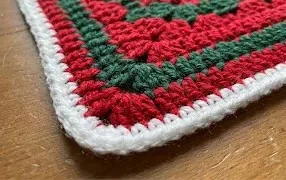
Your finished placemat has a neat, sturdy surface that can bring a handmade touch to holiday meals year after year. For a simple variation, work the square in alternating red and cream rows, carrying the unused yarn loosely along the edge or cutting it at each color change and weaving in the ends. If you make a set, keep the same color order so the pieces look coordinated on the table. Share a photo of your finished work on Pinterest or your favorite social media platform; seeing the colors and details you chose is part of the fun. When you’re ready for another seasonal project, browse the blog for more free crochet patterns.