Easy Crochet Snowman Garland Free Pattern for Winter
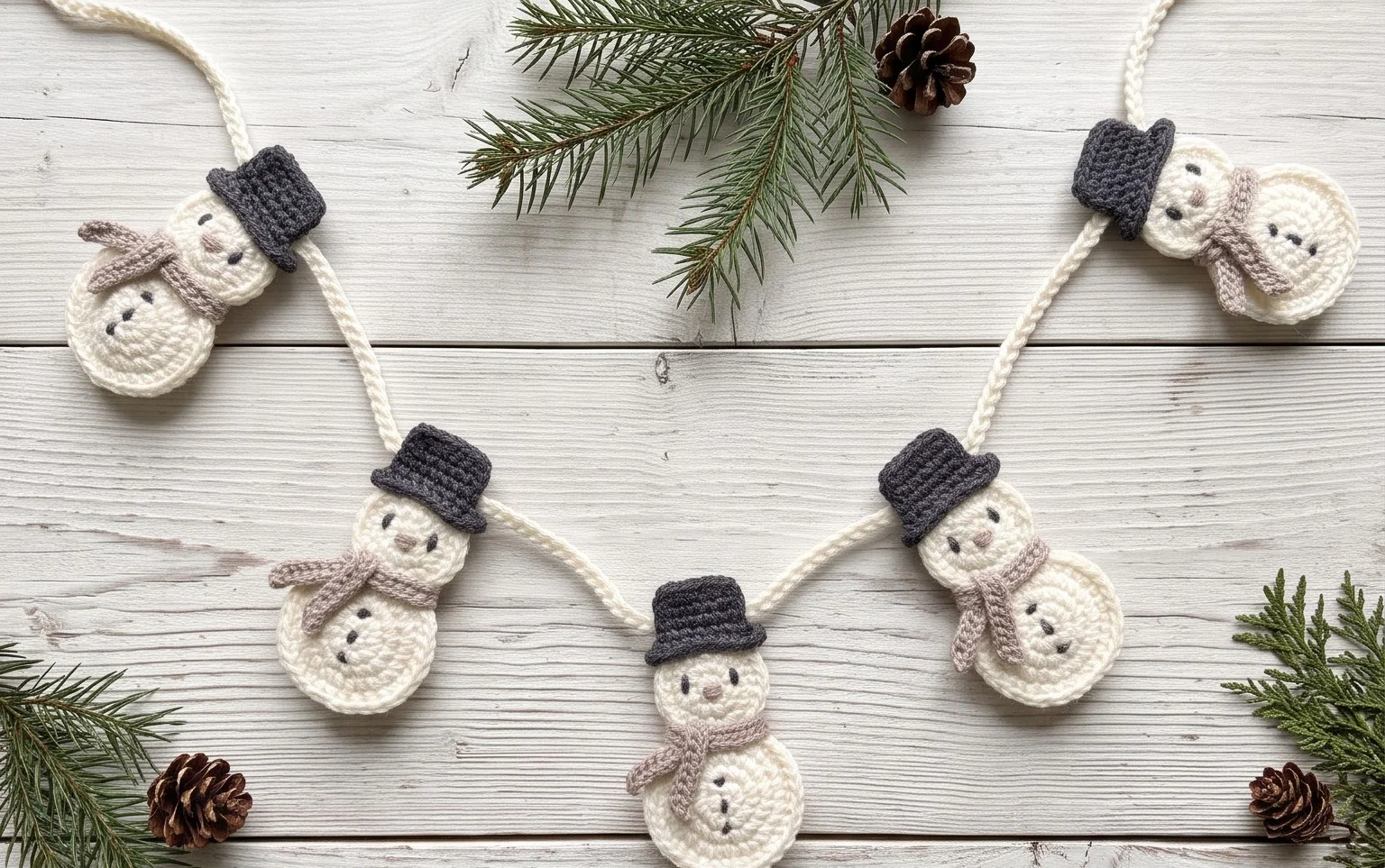
Soft yarn gives each little snowman a cozy look, and a row of them makes a cheerful garland for a mantel, doorway, or winter tree. This crochet project suits beginners who want to practice steady stitches, as well as gift makers and anyone who likes handmade seasonal decor. The small motifs are satisfying to work one at a time, so you can see the garland take shape without committing to a large project. You’ll learn how the snowman pieces are crocheted, finished, and joined into a hanging strand, with simple techniques that are easy to follow at a relaxed pace. Choose classic white with bright accents, or use yarn you already have for a more personal color scheme. Once complete, the garland adds a soft, handmade touch to a room throughout the holiday season.
Why You’ll Love This Pattern
A firm single crochet fabric makes this cotton dishcloth useful for wiping counters, washing dishes, or drying produce. The square shape comes from working straight rows, so there is no shaping to track and no seam to sew. One ball of worsted cotton is enough for the cloth, making it a practical project for a quiet evening or for using up a partial skein.
- The stitch pattern uses only single crochet, with a simple chain at the beginning of each row.
- Its dense texture holds up well to regular washing and gives your hands a comfortable grip.
- The plain fabric is easy to count and makes a useful first project for practicing even edges.
- A finished cloth is a handy handmade gift that can be folded and tied with kitchen twine.
The rows were easy to keep track of, and the cotton made a sturdy cloth that washed well after a few uses.
— Mara, sample crocheter
Pattern Overview & Skill Level
- Skill Level: Beginner. You need to chain, single crochet, and turn your work.
- Approximate Time: About 2 to 3 hours, depending on your pace and how often you check your stitch count.
- Construction: Work one flat rectangle in rows of single crochet, then weave in the starting and finishing tails. No joining or seaming is needed.
- Finished Dimensions & Sizing: Approximately 8 × 8 in (20 × 20 cm) after washing and drying flat. The dimensions assume a gauge of 16 single crochet stitches and 18 rows per 4 in (10 cm).
Gauge is less important for a dishcloth than for a garment, but it helps you estimate the finished size and yarn use. If your swatch is wider or taller than the stated gauge, the cloth will change size too.
Materials & Supplies Needed
- Yarn: About 90 yd (82 m) of worsted-weight cotton yarn, category #4. A single solid color makes the rows easy to see; use a machine-washable cotton for regular kitchen use.
- Hook: 5.0 mm (US H-8).
- Notions: Tapestry needle for weaving in ends, scissors, and a ruler or tape measure. A stitch marker is optional.
- Substitutions: Choose another 100% cotton yarn in a similar worsted thickness. A thinner cotton will make a smaller, lighter cloth; a thicker cotton will make a larger, heavier one and may need a larger hook. Cotton blends can feel softer, but check the yarn label for washing instructions.
Stitch Guide & Abbreviations (US Terms)
- ch: Chain.
- sc: Single crochet. Insert the hook in the stitch, yarn over and pull up a loop, then yarn over and pull through both loops.
- st / sts: Stitch / stitches.
- rep: Repeat.
- FO: Fasten off by cutting the yarn and pulling the tail through the last loop.
The turning chain does not count as a stitch in this pattern. Work the first single crochet of each row into the first stitch, not into the turning chain. This keeps the stitch count at 32 and helps the edges stay straight.
Step-by-Step Pattern Instructions
Dishcloth
- Row 1: Ch 33. Sc in the second ch from the hook and in each ch across. Turn. (32 sts)
- Row 2: Ch 1, sc in each st across. Turn. (32 sts)
- Rows 3–10: Rep Row 2 eight times. Each row has 32 sc. Turn after each row. (32 sts per row)
- Rows 11–20: Rep Row 2 ten times. Keep the same relaxed tension and count 32 sc in every row. Turn after each row. (32 sts per row)
- Rows 21–30: Rep Row 2 ten times. Check that the sides remain straight and that no stitch has been skipped at either edge. Turn after each row. (32 sts per row)
- Rows 31–36: Rep Row 2 six times. After Row 36, count 32 stitches across the final row. (32 sts per row)
Finishing
FO, leaving a tail about 6 in (15 cm) long. Thread the tail onto a tapestry needle and weave it through several stitches on the edge, then change direction and weave through a few more. Secure the starting tail in the same way. Trim the ends close without cutting into the cloth. Wet the dishcloth, squeeze out water without twisting, and lay it flat to dry. If the fabric measures slightly differently from 8 in square, gently shape it while damp.
Care & Washing Instructions
- Wash cotton dishcloths in a machine on a warm cycle, up to 40°C (104°F), or follow the yarn label if it gives a lower limit.
- Dry flat when possible; reshape the damp cloth rather than stretching it by the corners.
- Block lightly while damp by patting the edges square. Do not pull hard on the stitches.
Pro Tips & Common Mistakes to Avoid
- Keep your tension even: A tight starting chain can pull the bottom edge inward. If your chain feels much firmer than your single crochet, remake it with a looser hand or use a hook 0.5 mm larger just for the chain.
- Count both edges: Each row should have 32 single crochets. Place a marker in the first stitch of a row if you often miss the last stitch, then remove it as you reach that edge.
- Hide tails securely: Weave each yarn end through several stitches, reverse direction, and pass through a few more. This is less likely to loosen with repeated washing than a short knot alone.
- Adjust the size deliberately: Add or remove starting chains in pairs to change the width, then add or remove rows to change the length. A larger cloth uses more yarn; a smaller one uses less. Keep an odd number of starting chains so the first single crochet lands correctly in the second chain from the hook.
Frequently Asked Questions
Can I use acrylic yarn instead of cotton?
You can, but acrylic may not absorb water as well as cotton and can feel less suitable for wiping dishes. The fabric may also have a softer, stretchier texture. Check the yarn label before washing, and make a small swatch to see how it behaves when damp.
How can I make the dishcloth larger or smaller?
Change the starting chain to adjust the width, keeping the chain count odd so Row 1 begins in the second chain from the hook and produces an even number of stitches. Work more or fewer rows to adjust the length. Recheck the dimensions as you go because yarn thickness and tension affect the finished size.
Is this a good first crochet project?
Yes. The pattern uses only chains and single crochet, and there are no increases, decreases, or joins. The main challenge is remembering to work the first and last stitch of every row so the edges do not narrow.
May I sell dishcloths made from this pattern?
Check the designer’s terms before selling finished items, and follow any credit or selling conditions they give. If you sell the cloth, describe its fiber accurately and include the care directions from the yarn label.
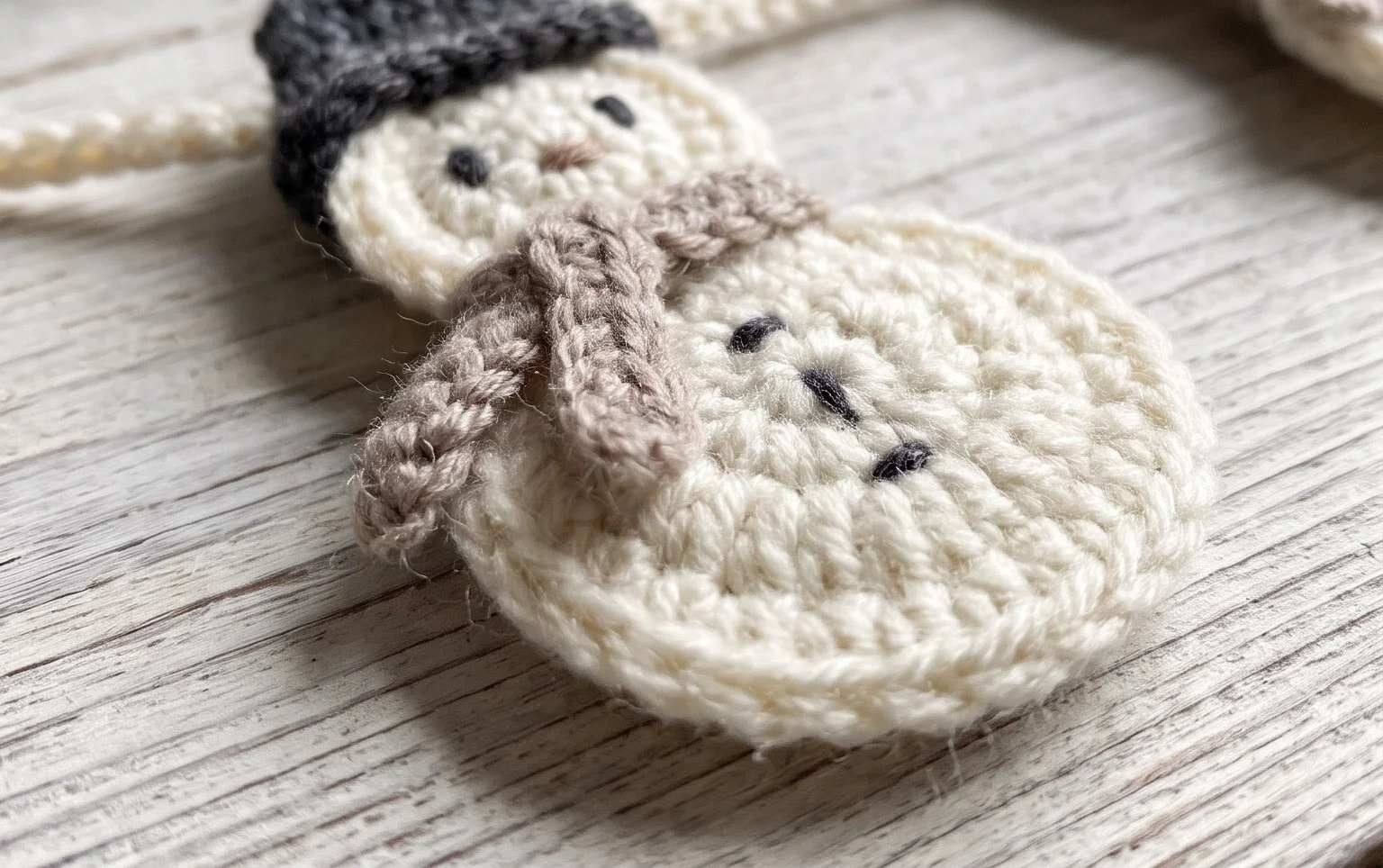
A finished strand of crocheted snowmen brings a soft, handmade touch to a mantel or window, and each little figure gives the garland its own cheerful character. For a simple variation, change the accent yarn to match your holiday decorations or the room where you plan to hang it. If you make this project, share a photo on Pinterest or your favorite social media platform so others can see your colors and display ideas. You can also browse the blog for more free crochet patterns, including seasonal projects and small handmade gifts to work on between larger makes.