Easy Monstera Crochet Patterns for Leafy Home Decor
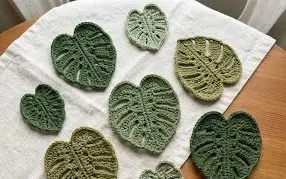
Soft cotton yarn can turn into a split Monstera leaf with curled edges, a small wall hanging, or a potted plant that stays green all year. These crochet designs bring a little leafy detail to a shelf or sunny corner without needing watering, and they suit home decor lovers who enjoy handmade touches. Beginners can start with a simple flat leaf, while more experienced crocheters can shape several leaves and arrange them in a pot. The patterns use familiar stitches such as chains and single crochet, with increases and decreases helping form the leaf’s outline. You’ll find guidance on shaping, choosing yarn and wire or other supports, and finishing pieces so they hold their form. Each project has a clear result, making it satisfying to watch a few rows become recognizable foliage, whether you’re making a small gift or a larger wall display.
Why You’ll Love This Pattern
This square cotton dishcloth is worked in single crochet, so the fabric is firm, absorbent, and easy to wash. Its simple rows give beginners a chance to practise even tension without keeping track of increases or decreases. One cloth takes a modest amount of yarn, making it useful for leftover cotton, and the finished piece works as a practical kitchen gift.
The pattern has a plain, reversible surface and no separate border to attach. Count the stitches at the end of each row, and the square stays straightforward from the foundation chain to the final fasten-off.
I made this during a quiet evening, and the rows were easy to follow. The cotton cloth feels sturdy after washing.
— Nora, home crocheter
Pattern Overview & Skill Level
- Skill Level: Beginner. You need to chain and make single crochet stitches.
- Approximate Time: About 2–3 hours, depending on your pace and how often you stop to count.
- Construction: A flat square worked back and forth in rows, then fastened off and woven in at the edges. There is no seam or separate edging.
- Finished Dimensions & Sizing: Approximately 6 × 6 in (15 × 15 cm) with the suggested yarn and hook. Cotton thickness and personal tension can change the finished size slightly.
Materials & Supplies Needed
- Yarn: About 45 yd (41 m) of worsted-weight cotton yarn, weight #4, in one color. Cotton absorbs water and tolerates regular laundering. A small amount of a second color can be used for a contrasting cloth, but the pattern itself uses one color.
- Hook: 4.0 mm / G-6 crochet hook. Use the hook that gives you a dense fabric without making your hand uncomfortable.
- Notions: Tapestry needle for weaving in the two yarn ends, scissors, and a ruler or tape measure. A stitch marker is optional for marking the first stitch of each row.
- Substitutions: Choose another smooth, washable cotton yarn close to worsted weight. A thinner yarn makes a smaller, lighter cloth; a thicker yarn makes it larger and heavier and may need a larger hook. Acrylic can be used, but it absorbs water differently and may not suit a dishcloth used for drying dishes.
Check the yarn label before substituting. If you want the finished cloth to stay near 6 in square, use a similar yarn thickness and check the fabric dimensions after several rows.
Stitch Guide & Abbreviations (US Terms)
- ch = chain.
- sc = single crochet: insert the hook into the stitch, yarn over and pull up a loop, yarn over and pull through both loops on the hook.
- st = stitch.
- sts = stitches.
- rep = repeat.
- t-ch = turning chain. In this pattern, ch 1 at the start of a row does not count as a stitch.
Work the first single crochet into the first stitch after turning, not into the turning chain. This keeps the row count at 24 stitches and helps the sides stay straight.
Step-by-Step Pattern Instructions
Use US crochet terms throughout. The turning chain does not count as a stitch. Each row has 24 single crochet stitches, including the first and last stitch. Turn your work at the end of every row.
Dishcloth
- Foundation: Ch 25. The extra chain gives you room to work 24 single crochet stitches across the first row.
- Row 1: Sc in the second ch from the hook and in each ch across. Turn. (24 sts)
- Row 2: Ch 1, sc in each st across. Turn. (24 sts)
- Rows 3–24: Rep Row 2 for 22 rows. Turn after each row. (24 sts per row)
After Row 24, the piece should measure close to 6 in long and 6 in wide. If it is noticeably rectangular, check that you have worked into the first stitch and the last stitch on every row. Small differences in tension are normal.
Finishing
- Fasten off, leaving a tail long enough to weave in securely.
- Thread the tail onto a tapestry needle. Run it through several stitches along the edge, then change direction and weave it through a few more stitches so it is less likely to work loose in the wash. Repeat with the starting tail.
- Lay the cloth flat and gently smooth the edges. Measure it before washing if you want to record your personal finished size.
No stuffing, joining, or sewing is needed. Keep the cloth flat while you weave in the ends so the corners do not pull inward.
Care & Washing Instructions
- Wash cotton in cool or warm water, up to 40°C (104°F), with similar colors; follow the yarn label if it gives a lower limit.
- Air-dry flat or tumble-dry on low if the yarn label permits; high heat can shrink cotton.
- Reshape the damp cloth by smoothing its corners and edges flat; blocking is optional for this practical item.
Pro Tips & Common Mistakes to Avoid
- Keep your tension even rather than pulling each stitch tight. Very tight single crochet can make the cloth stiff and smaller than expected; loosen your grip or try a 4.5 mm hook if the fabric feels hard to work.
- Count 24 stitches at the end of every row. Place a marker in the first stitch if you tend to miss the final stitch at the edge; remove it before working into that stitch on the next row.
- Weave each end through several stitches, then change direction. Trimming a tail immediately after one pass can let it slip free during repeated washing.
- To adjust the size, chain more or fewer stitches for the width and work more or fewer rows for the length. Each added stitch and row uses extra yarn, so allow more than the listed 45 yd for a larger cloth.
Frequently Asked Questions
Can I use acrylic yarn instead of cotton?
Yes, but acrylic is less absorbent than cotton and may feel different when used wet. Choose a smooth worsted-weight yarn and check the care label; the finished size can change with the fiber and yarn thickness.
How can I make the dishcloth smaller or larger?
Change the foundation chain to alter the width, then work more or fewer rows to adjust the length. For a square, measure the width and stop when the length is close to the same measurement. A larger cloth will use more yarn and take longer.
Is this pattern suitable for a first crochet project?
Yes. It uses only chains and single crochet stitches, with the same stitch count on every row. Practise counting the foundation row carefully, since missing a chain at the start can make the cloth narrower.
May I sell dishcloths made from this pattern?
Check the designer’s terms before selling finished items, and follow any conditions they set. If you sell your work, describe the materials accurately and do not claim the pattern as your own.
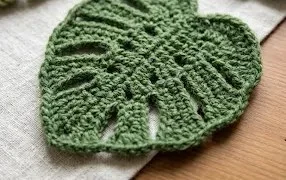
A finished crochet Monstera leaf has crisp splits and a soft, handmade texture that adds a little greenery to a wall, shelf, or desk. If you want to change the look, try a deeper forest green, a variegated yarn, or a larger hook for a broader leaf. You can also group several leaves in a simple crocheted pot or join them into a small hanging arrangement. Share a photo of your finished project on Pinterest or your favorite social platform; seeing different colors and shapes is part of the fun. When you’re ready for another relaxing make, explore more free crochet patterns on the blog, including small home accents and gifts you can finish with a few evenings of stitching.