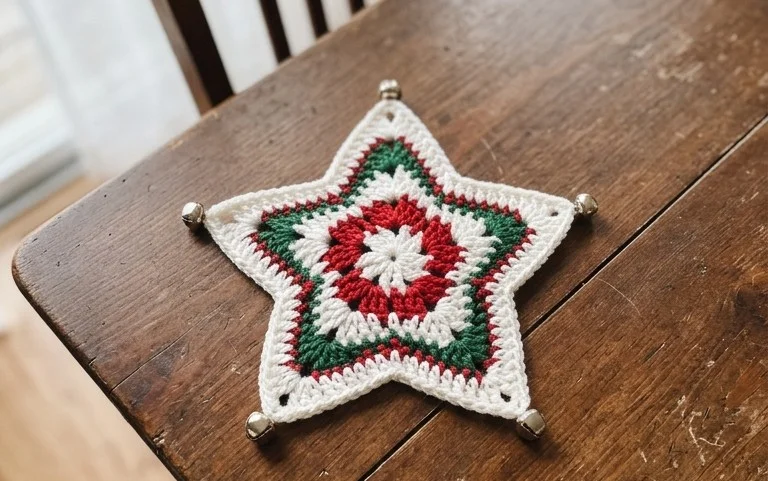
Easy Bowl Cozy Hot Pad Free Crochet Patterns for Home Decor
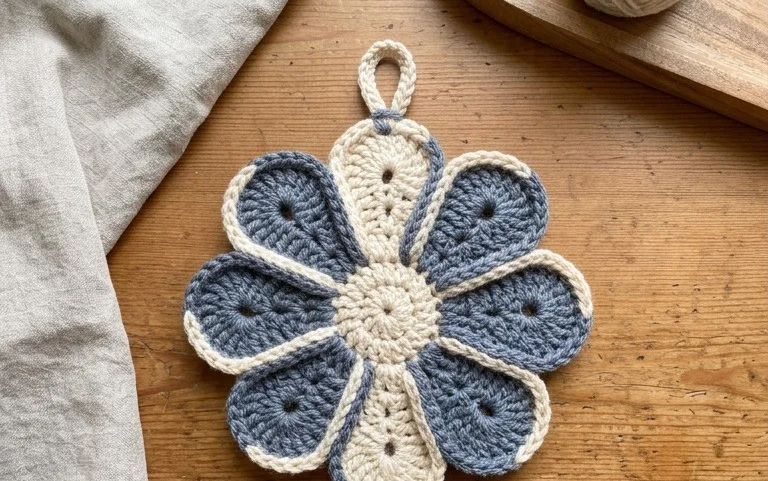
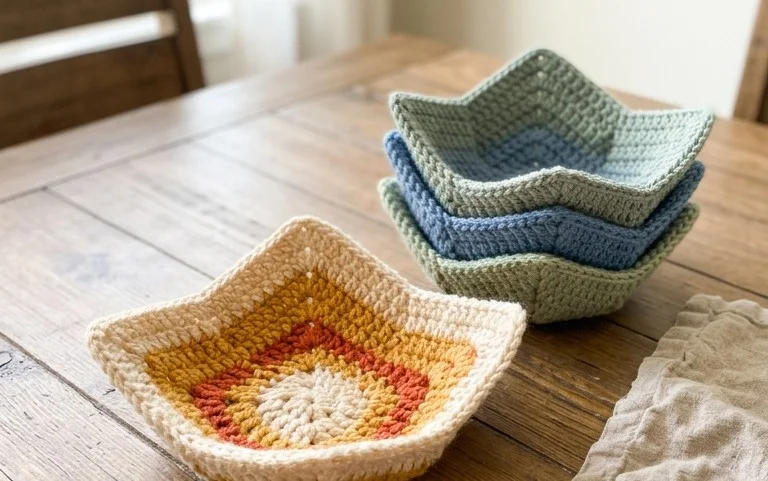
Firm cotton stitches give a crocheted bowl cozy hot pad a dense, soft texture that sits snugly around a warm bowl or lies flat beneath one. Cotton yarn keeps the fabric sturdy, while a tidy edge makes the finished piece neat enough to leave on the kitchen table. This project suits beginners ready to practise even tension, gift makers putting together a useful housewarming present, and home decor fans who like handmade pieces in colors that match their kitchen. Working through the stitches is satisfying because each row or round builds a firm fabric with a clear shape. The pattern guidance explains how to keep the edges even and how shaping helps the cozy hug a bowl without bunching, so the finished piece is practical in daily use and simple to customize with a contrast border.
Why You’ll Love This Pattern
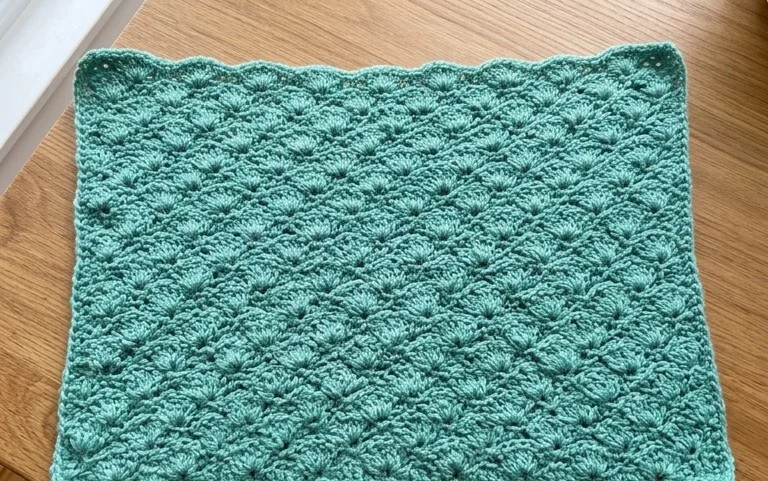
A firm cotton fabric and simple single crochet stitches make this dishcloth useful for everyday kitchen jobs. The flat, rectangular shape is easy to hold, and the same stitch worked across each row gives beginners a chance to practise even tension without tracking increases or decreases.
The pattern uses about 90 yards of worsted cotton, so one small skein is usually enough. Cotton is absorbent and holds up well to regular washing. The cloth also works as a practical handmade gift, especially when paired with a bar of soap or a wooden dish brush.
The rows were easy to keep track of, and the cotton feels sturdy without being too thick to rinse out.
— Maya, home crocheter
Pattern Overview & Skill Level
- Skill Level: Beginner. You need to know how to chain and single crochet.
- Approximate Time: About 2–3 hours, depending on your pace and how often you pause to check your edges.
- Construction: A flat rectangle worked in rows from the foundation chain. No seams or rounds are needed.
- Finished Dimensions & Sizing: About 8.5 × 7.5 inches (22 × 19 cm) when the gauge is met. Cotton can relax slightly after washing.
Materials & Supplies Needed
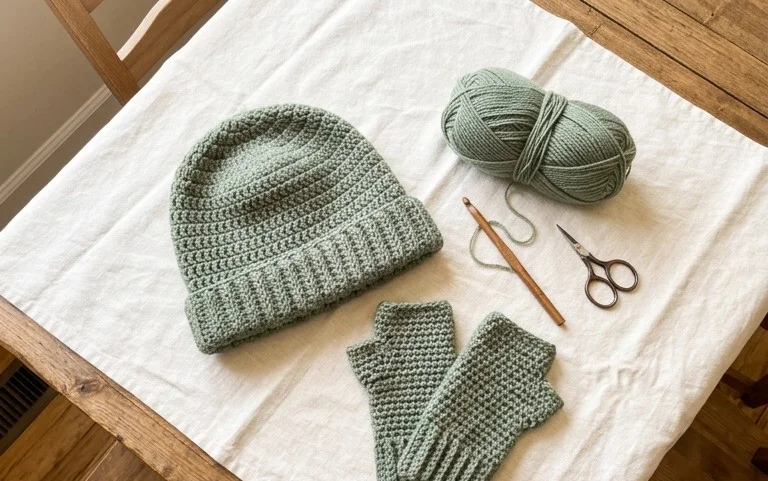
- Yarn: About 90 yards (82 m) of worsted-weight #4, 100% cotton yarn in one color. A smooth, light-colored yarn makes it easier to see each stitch.
- Hook: 5.0 mm / H-8 crochet hook. Use a hook that gives you a firm fabric without making the stitches hard to work.
- Notions: Tapestry needle for weaving in the ends, scissors, and a ruler or measuring tape. A stitch marker is optional for marking the first or last stitch of a row.
- Substitutions: A similar-weight cotton or cotton-linen blend is suitable. Acrylic can be used, but it is less absorbent and may not suit a dishcloth used for wiping or washing. Different yarn fibers or thicknesses will change the finished size, texture, and yardage needed.
Gauge: 14 single crochet stitches and 16 rows measure 4 × 4 inches (10 × 10 cm). Make a small swatch if you want the finished dimensions to match. If your swatch is too large, try a smaller hook; if it is too small, try a larger hook. The cloth remains usable if your gauge differs, but its size and yarn use will change.
Stitch Guide & Abbreviations (US Terms)
- ch: Chain.
- sc: Single crochet. Insert the hook into the stitch, yarn over and pull up a loop, then yarn over and pull through both loops on the hook.
- st: Stitch.
- sts: Stitches.
- rep: Repeat.
Turning chains do not count as stitches in this pattern. At the beginning of each row, make one chain, then work the first single crochet into the first stitch of the previous row.
Step-by-Step Pattern Instructions
Dishcloth
- Foundation: Ch 31. Keep the chain loose enough to insert your hook easily.
- Row 1: Sc in the second ch from the hook and in each ch across. Ch 1, turn. (30 sts)
- Rows 2–30: Sc in each st across. Ch 1, turn at the end of Rows 2–29. After Row 30, fasten off. (30 sts each row)
Count the first row carefully: the skipped chain does not count as a stitch, and the 30 single crochets create the stitch count for every row that follows. Keep the turning chain separate from the first stitch so the side edges stay straight. If the fabric begins to narrow, check that you are working into the final stitch at the end of each row.
Finishing
Cut the yarn, leaving a tail long enough to weave in securely. Pull the tail through the last loop to fasten off. Thread the tail onto a tapestry needle and weave it through several stitches on the wrong side, changing direction once so it is less likely to work loose. Weave in the foundation tail the same way. Check that both edges have 30 stitches across and trim any remaining yarn close to the fabric.
This pattern has no added border. A border is not needed for the cloth to work, and adding one will change its dimensions and use extra yarn. Wash and dry the finished piece before measuring it, since cotton may settle into shape after its first wash.
Care & Washing Instructions
- For 100% cotton yarn, machine wash with like colors in warm water, up to 40°C (104°F), or follow the yarn label if it sets a lower limit.
- Tumble dry on low or lay the cloth flat to dry; high heat can shrink cotton.
- While damp, gently reshape the rectangle and smooth the edges; blocking is optional, but helps even out uneven sides.
Pro Tips & Common Mistakes to Avoid
- Keep your tension steady: Cotton has little stretch, so tight stitches can make the hook tiring to use. Let the yarn move freely and aim for the stated gauge rather than pulling each stitch snug.
- Count every row: Check for 30 stitches before turning. Place a marker in the first or last stitch if those edge stitches are easy to miss. This project is worked flat, so there is no round start to mark.
- Hide the tails well: Weave each end through several stitches on the wrong side, then change direction. A short tail worked through only one row can loosen with repeated washing.
- Adjust the size deliberately: For a wider cloth, begin with more chains while keeping one fewer single crochet than the chain count. Add rows for extra length. Larger dimensions use more yarn; check the cloth as you work and keep enough yarn for the final rows.
Frequently Asked Questions
Can I use a different yarn for this dishcloth?
Yes. Worsted cotton is recommended because it is absorbent and holds its shape well. A cotton-linen blend is also suitable. Acrylic can make a soft cleaning cloth, but it absorbs less water. Changing yarn weight will affect the finished size and may require a different hook.
How can I make the dishcloth smaller or larger?
For a narrower cloth, start with fewer chains, making sure the foundation chain has one more chain than the number of single crochet stitches you want. For a wider cloth, add chains. Work more or fewer rows to change the length. The stitch count across each row should stay the same, and a larger cloth will need more yarn.
Is this pattern suitable for a first crochet project?
Yes. It uses only chains and single crochet stitches, with no shaping, color changes, or sewing. Take extra care to count the 30 stitches across each row, since missing an edge stitch can make the rectangle taper.
May I sell dishcloths made from this pattern?
You can sell finished items only if the designer’s terms allow it. Check the specific pattern or website terms before selling, and write your own product description and photographs rather than presenting the pattern itself as your work.
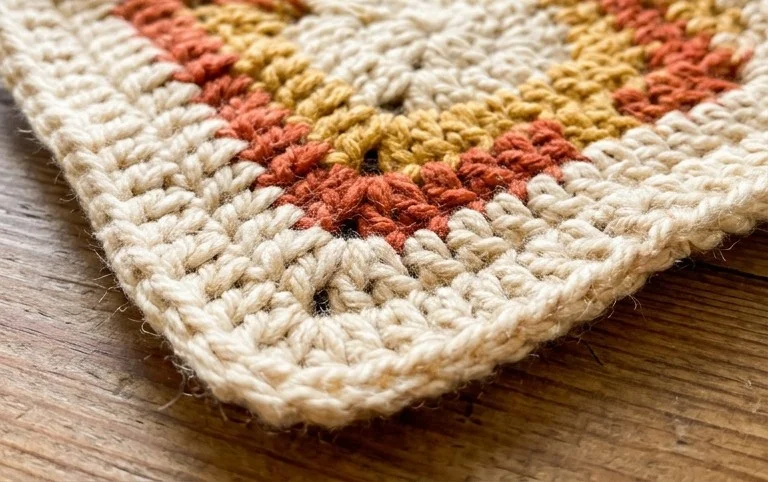
When the final end is woven in, you have a useful bowl cozy hot pad with a firm cotton feel and a shape made for everyday meals. It is a satisfying finish for a few quiet hours of crochet, and the finished piece is handy to keep near the soup bowls or give as a housewarming gift. For a simple variation, work the cozy in a different cotton color to suit your kitchen or make a matching set. Share a photo of your finished project on Pinterest or social media so other crocheters can see how yours turned out. Then explore more free crochet patterns on the blog for your next practical handmade project.