35 Free Christmas Quilt Patterns: Easy Festive Ideas
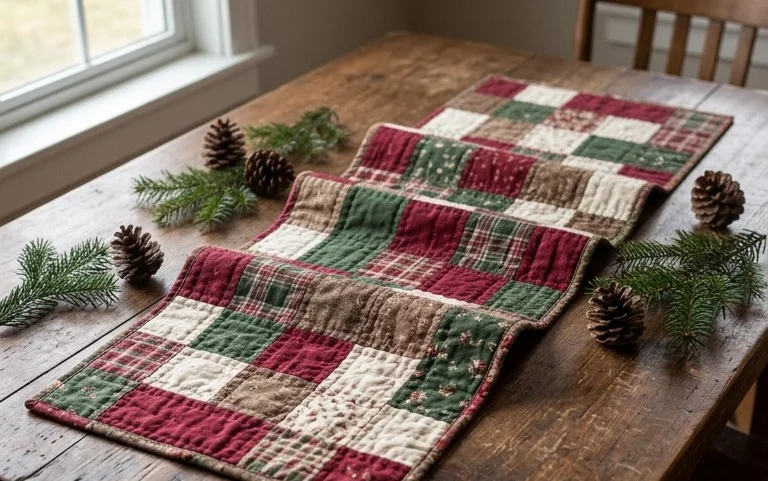
Red-and-green blocks, snowy prints, and rows of tiny trees give Christmas quilts their familiar warmth and seasonal charm. These designs range from small projects that can be finished between holiday errands to larger quilts made for the bed or sofa, so there is room to choose a pattern that fits your time and sewing experience. Beginners can start with simple squares and straight seams, while confident quilters can look for patchwork layouts with more pieces to join. This collection gathers 35 free Christmas quilt patterns, along with 13 additional patterns available to buy. You’ll find ideas for table runners, wall hangings, throws, and keepsake gifts, plus tips for choosing fabrics, handling seams, and getting a neat finish. A finished quilt brings color and a soft, handmade touch to holiday decorating, and the steady rhythm of cutting and stitching makes it a satisfying project to work on through the season.
Why You’ll Love This Pattern
This square cotton washcloth uses single crochet rows, so the fabric is firm, easy to count, and useful at the sink or in the bath. It is a good first project for practicing even tension because the same stitch is repeated across every row. The compact size makes it manageable to finish in a few evenings, and one ball of cotton yarn is usually enough.
The finished cloth also makes a practical handmade gift. Choose a smooth, machine-washable cotton for everyday use, and keep a stitch marker or row counter nearby to track your progress.
The rows were easy to follow, and the cotton made a sturdy cloth. I used the leftover yarn for a hanging loop.
— Maya, beginner crocheter
Pattern Overview & Skill Level
- Skill Level: Beginner. You need to know how to chain and make a single crochet.
- Approximate Time: About 3–4 hours, depending on your pace and tension.
- Construction: Worked flat in turning rows, then edged with one round of single crochet.
- Finished Dimensions & Sizing: Approximately 20 cm (8 in) square, excluding any optional hanging loop. The exact size depends on your gauge.
Materials & Supplies Needed
- Yarn: About 60 m (65 yd) of worsted-weight (#4) 100% cotton yarn. A single solid color makes it easier to see each stitch.
- Hook Size: 5.0 mm / H-8 crochet hook. Change hook size if needed to match the gauge.
- Notions: Tapestry needle for weaving in ends, scissors, and a stitch marker or row counter.
- Substitutions: Use a similar amount of smooth, machine-washable cotton or cotton blend. Acrylic can feel less absorbent and may hold water differently. A thicker yarn or larger hook will make a larger, looser cloth; a thinner yarn or smaller hook will make a smaller, denser cloth.
- Gauge: 15 single crochet stitches and 16 rows measure approximately 10 cm (4 in) using the stated yarn and hook. Make a small swatch if you want to check the finished size before starting.
Stitch Guide & Abbreviations (US Terms)
- ch: Chain.
- sc: Single crochet. Insert the hook in the stitch, yarn over and pull up a loop, yarn over and pull through both loops.
- sl st: Slip stitch. Insert the hook in the stitch, yarn over and pull through the stitch and the loop on the hook.
- st(s): Stitch or stitches.
- rep: Repeat.
- RS: Right side, the face of the cloth you choose to show.
- WS: Wrong side, the opposite face.
The turning chain does not count as a stitch in this pattern. Work the first single crochet of each row into the first stitch, not into the turning chain.
Step-by-Step Pattern Instructions
Washcloth
Foundation: Ch 31. The foundation chain is not included in the row stitch count.
Row 1: Sc in the second ch from the hook and in each ch across. Turn. (30 sts)
Row 2: Ch 1, sc in each st across. Turn. (30 sts)
Rows 3–32: Rep Row 2. Turn after each row. (30 sts per row)
There are 32 rows total. If you want to check the dimensions, lay the cloth flat without stretching it. The piece should measure close to 20 cm square. If it is much longer than it is wide, check that you have worked all 32 rows and are not adding an extra stitch at the row ends.
Edging and Finishing
After Row 32, ch 1 and turn the work so you can crochet around the outside edge. Sc evenly along the row ends, placing about one stitch in each row end. At each corner, work 3 sc in the corner stitch or space. Along the foundation chain and final row, work 30 sc on each edge, placing 3 sc in each corner. Join with a sl st to the first sc of the edging, then fasten off.
Keep the side edging even without pulling it tight. If the fabric puckers, there are too many stitches along that edge; if it ruffles, there are too few. Thread the yarn tail onto a tapestry needle and weave it through several stitches on the wrong side. Secure the other tail in the same way. Do not leave a loose end that could catch during washing.
For an optional hanging loop, join yarn with a sl st at one corner after completing the edging. Ch 12, then sl st into the same corner. Fasten off and weave in both ends securely. The loop adds a little yarn and may stretch with use, so keep it short if the cloth will be hung while wet.
Care & Washing Instructions
- Wash cotton in a machine on a gentle or normal cycle at up to 40°C (104°F), or hand-wash in warm water with mild detergent.
- Dry flat or tumble-dry on low; high heat can shrink cotton or make the cloth feel stiff.
- Reshape the damp cloth by smoothing its edges and corners flat; follow the yarn label if your fiber content differs.
Pro Tips & Common Mistakes to Avoid
- Keep your starting chain loose enough to match the width of the other rows. If the lower edge pulls inward, try making the chain with a hook one size larger, then switch to the pattern hook.
- Count the 30 stitches at the end of each row. A stitch marker in the first and last stitch can help prevent accidental increases or skipped edge stitches.
- Weave in yarn tails on the wrong side, following the stitch paths for several centimeters. Avoid tying a bulky knot, which can be uncomfortable against the skin.
- To change the size, add or remove foundation chains for width and add or remove rows for height. Each extra chain adds roughly one stitch of width, and extra rows use more yarn; check the cloth as you go rather than relying only on a measurement.
Frequently Asked Questions
Can I use acrylic yarn instead of cotton?
You can, but acrylic is generally less absorbent than cotton and may feel different as a washcloth. Check the yarn label for washing instructions, and expect the finished size and texture to change if the yarn is a different thickness.
How can I make the washcloth larger?
Add chains to the foundation for extra width and work additional rows for extra length. Keep the stitch count even across each row, and allow for more yarn. A larger hook can also make a looser, slightly larger cloth, but it may have more open spaces.
Is this pattern suitable for a first crochet project?
Yes. It uses chains, single crochet, turning, and a simple edging. The main challenge is keeping the row edges straight, so count the stitches regularly and place a marker in the first or last stitch if needed.
Can I sell washcloths made from this pattern?
Check the designer’s terms before selling finished items, and write your own product description and take your own photographs. Do not claim authorship of the pattern unless its terms explicitly allow that.
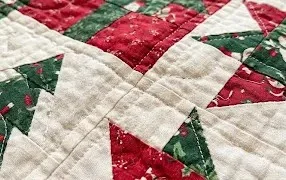
A finished Christmas quilt adds a soft layer of color to a bed, sofa, or holiday table, and each stitched block carries the time you put into making it. For a simple variation, swap classic red and green for cream, navy, and gold, or adjust the block size to suit a smaller wall hanging. Take a photo of your finished quilt in its holiday spot and share it on Pinterest or social media so other makers can see your fabric choices. If you have more time for seasonal sewing, explore the other free patterns on the blog for another project to enjoy.