Easy Crochet Dishcloth Pattern for Beginners, Free
Worsted cotton gives this crochet dishcloth a firm, slightly textured feel that works well for washing dishes or wiping the counter. The finished square measures about 8 inches and folds neatly beside the sink or into a small gift basket. If you are new to crochet, the simple rows of single crochet give you room to practise even tension and keep track of your stitches without juggling a complicated pattern. It is also a handy project for gift makers and anyone who likes useful, handmade pieces around the home. You will learn how to work the square back and forth, count each row, and make a turning chain that does not count as a stitch. The cloth uses a modest amount of cotton yarn, so a leftover skein can be enough. Once you finish, you will have a washable everyday item and a straightforward pattern you can repeat in other colors.
Why You’ll Love This Pattern
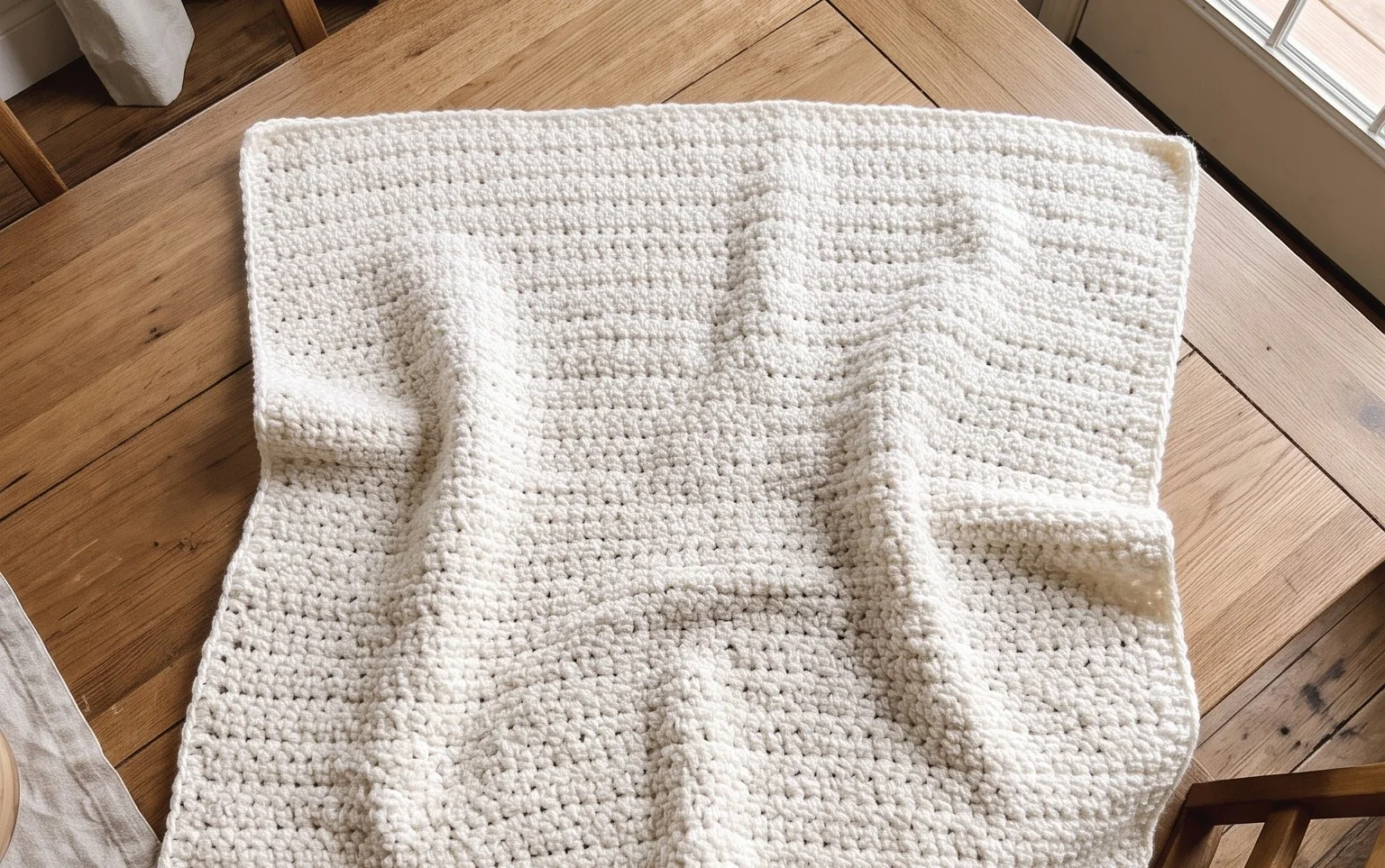
A firm square of worsted cotton makes a useful dishcloth for washing dishes, wiping counters, or keeping beside the sink. This beginner-friendly pattern uses single crochet throughout, so you can focus on even tension and counting rather than learning a complicated stitch.
The small size makes it a practical project for leftover cotton yarn, and the fabric works up quickly in simple rows. Make a matching set in one color or use separate shades, keeping in mind that a new color creates extra ends to weave in. The finished square is also easy to fold and tuck into a gift basket.
The rows were easy to keep track of, and the cotton made a sturdy cloth that held its shape after washing.
— Mara, sample crocheter
Pattern Overview & Skill Level
- Skill Level: Beginner. You need to know how to chain and make single crochet stitches.
- Approximate Time: About 2–3 hours, depending on your crochet speed and how often you stop to check your count.
- Construction: A flat square worked back and forth in rows. Each row has 32 single crochet stitches, with one turning chain that does not count as a stitch.
- Finished Dimensions & Sizing: About 8 x 8 inches (20 x 20 cm) after washing and drying flat. Size depends on your personal tension.
- Gauge: 16 single crochet stitches and 16 rows measure 4 inches (10 cm) square. Check your gauge before starting if you want the finished cloth close to the stated size.
Materials & Supplies Needed
- Yarn: About 75–90 yards of worsted-weight (#4) 100% cotton yarn. Choose one color, or use two cotton shades for stripes. The estimate includes a small allowance for finishing.
- Hook: 5.0 mm / H-8 crochet hook. If your fabric feels stiff, try a 5.5 mm / I-9 hook; if it feels loose and floppy, try a 4.5 mm / 7 hook.
- Notions: Tapestry needle for weaving in the starting and finishing tails, scissors, and a ruler or tape measure for checking gauge.
- Substitutions: Use another smooth, washable worsted cotton yarn with a similar thickness. A cotton-bamboo blend may feel softer and drape more, while scrubby cotton creates a rougher texture. Acrylic can be used for practice, but it may not absorb water as well as cotton. Any change in yarn or hook can alter the finished size and yardage.
Stitch Guide & Abbreviations (US Terms)
- ch = chain.
- sc = single crochet.
- st = stitch.
- sts = stitches.
- rep = repeat.
- turn = rotate the work so you can crochet back across the previous row.
To make a single crochet, insert the hook into the indicated stitch, yarn over, and pull up a loop. Yarn over again and draw through both loops on the hook. The turning chain at the start of each row gives you room to work the first stitch; it does not count toward the row’s stitch total.
Step-by-Step Pattern Instructions
Dishcloth
- Foundation: Ch 33. This makes 32 working chains plus one chain for turning.
- Row 1: Sc in the second ch from the hook and in each ch across. Turn. (32 sts)
- Row 2: Ch 1, sc in each st across. Turn. (32 sts)
- Rows 3–32: Rep Row 2. At the end of every row, you should have 32 sts. Do not add a sc into the turning chain. (32 sts each row)
- Fasten off: After Row 32, cut the yarn, leaving a tail of about 6 inches (15 cm). Pull the tail through the loop on your hook to secure it.
- Finish: Thread the tail onto a tapestry needle and weave it through several stitches on the edge, changing direction once so it stays secure. Weave in the starting tail the same way. Trim the loose ends without cutting into the fabric.
Measure the cloth before washing. If it is noticeably shorter than 8 inches, your row gauge may be tight; if it is longer, your rows may be loose. The stitch count should remain 32 across even if your personal dimensions differ. Wash and dry the cloth flat before using it so the cotton relaxes into its final shape.
Care & Washing Instructions
- Wash cotton dishcloths in a machine on a warm cycle, up to about 40°C (104°F), or hand-wash in warm water with mild detergent.
- Dry flat for the neatest square shape, or tumble dry on low if the yarn label allows it.
- While damp, smooth the edges and reshape the corners; blocking is optional for this everyday cotton project.
Pro Tips & Common Mistakes to Avoid
- Keep your loops a consistent size. If you tend to crochet tightly, relax your grip or move up one hook size; a stiff cloth is harder to use and may not meet gauge.
- Count the stitches at the end of every row, especially the first few. It is easy to miss the last stitch at the edge or accidentally crochet into the turning chain.
- Weave yarn tails through the backs of several stitches, then change direction. This helps the ends stay tucked in during repeated washing.
- For a smaller or larger cloth, change the starting chain by an even number and work the same number of rows as the number of stitches across. A larger square uses more yarn and takes longer; a smaller one uses less.
Frequently Asked Questions
Can I use acrylic yarn instead of cotton?
Yes, especially if you are making a practice square or want a softer cloth. Acrylic usually absorbs water differently and may not be as useful for dishwashing. Check the yarn label for washing instructions, and expect the finished dimensions to change if the yarn thickness differs.
How can I make the dishcloth a different size?
Add or remove foundation chains to change the width, then work more or fewer rows to change the height. Keep one extra chain for turning, and count the first row carefully so you know how many stitches to make in every later row. A larger cloth needs more yarn.
Is this pattern suitable for a first crochet project?
Yes. It uses only chains and single crochet, and the straight rows make it easy to practice keeping your edges even. If your first row has 32 stitches and each later row also has 32, the square should stay fairly even.
May I sell dishcloths made from this pattern?
You may sell finished items if the designer’s terms allow it. Check those terms before listing the cloth, and write your own product description and photographs rather than presenting the pattern itself as your work.
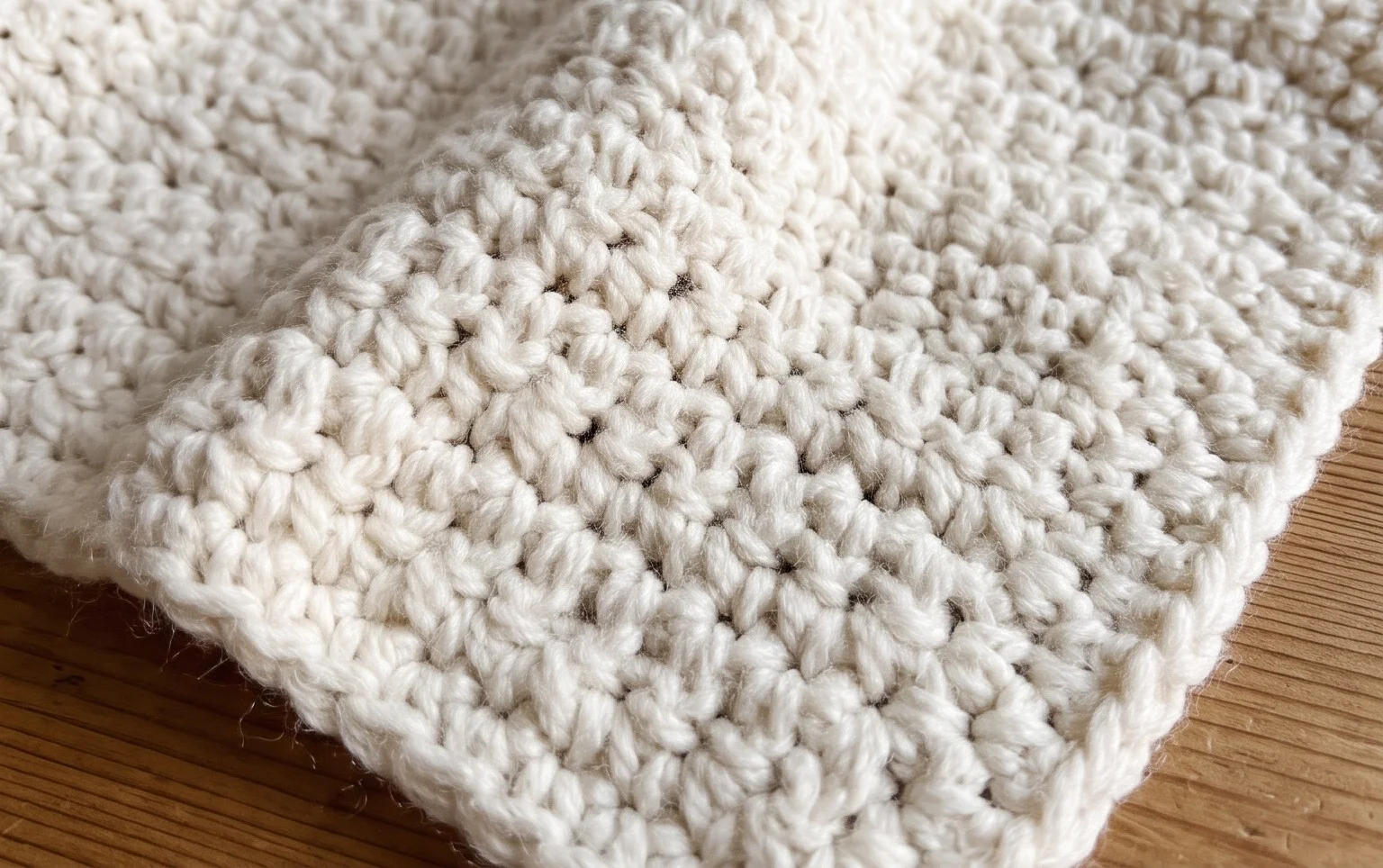
Your finished cotton square is a practical little piece to keep by the sink, and the even rows of single crochet give it a sturdy feel for everyday use. For a simple variation, work the cloth in two colors and change shades every few rows, then weave in the extra ends before washing. You can also make a larger square by adding stitches and rows, while keeping an eye on the shape as you go. If you make one, share a photo on Pinterest or your favorite social media platform so other crocheters can see your color choices. When you are ready for another small project, explore the free crochet patterns on the blog for more useful ideas to make at home or give away.